
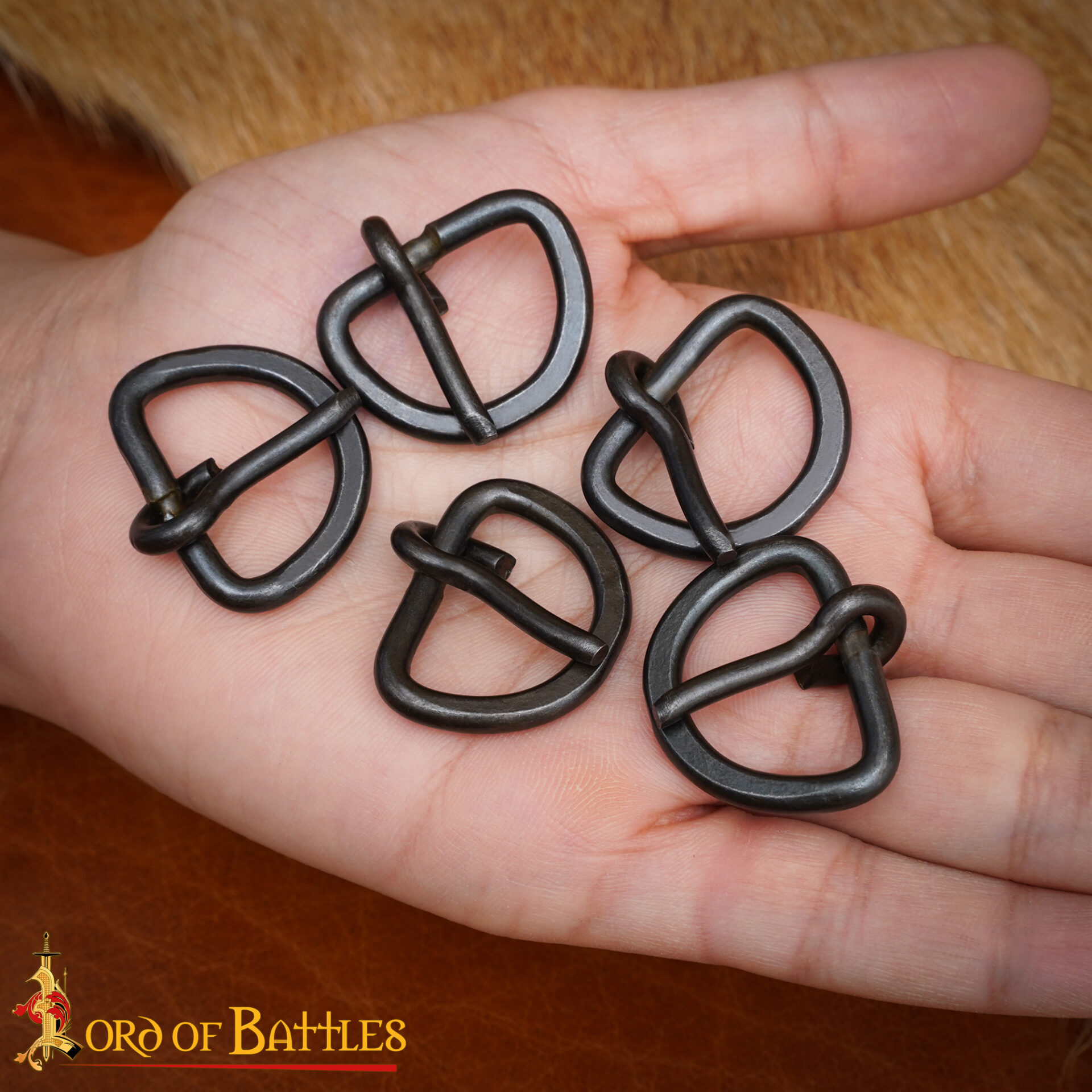
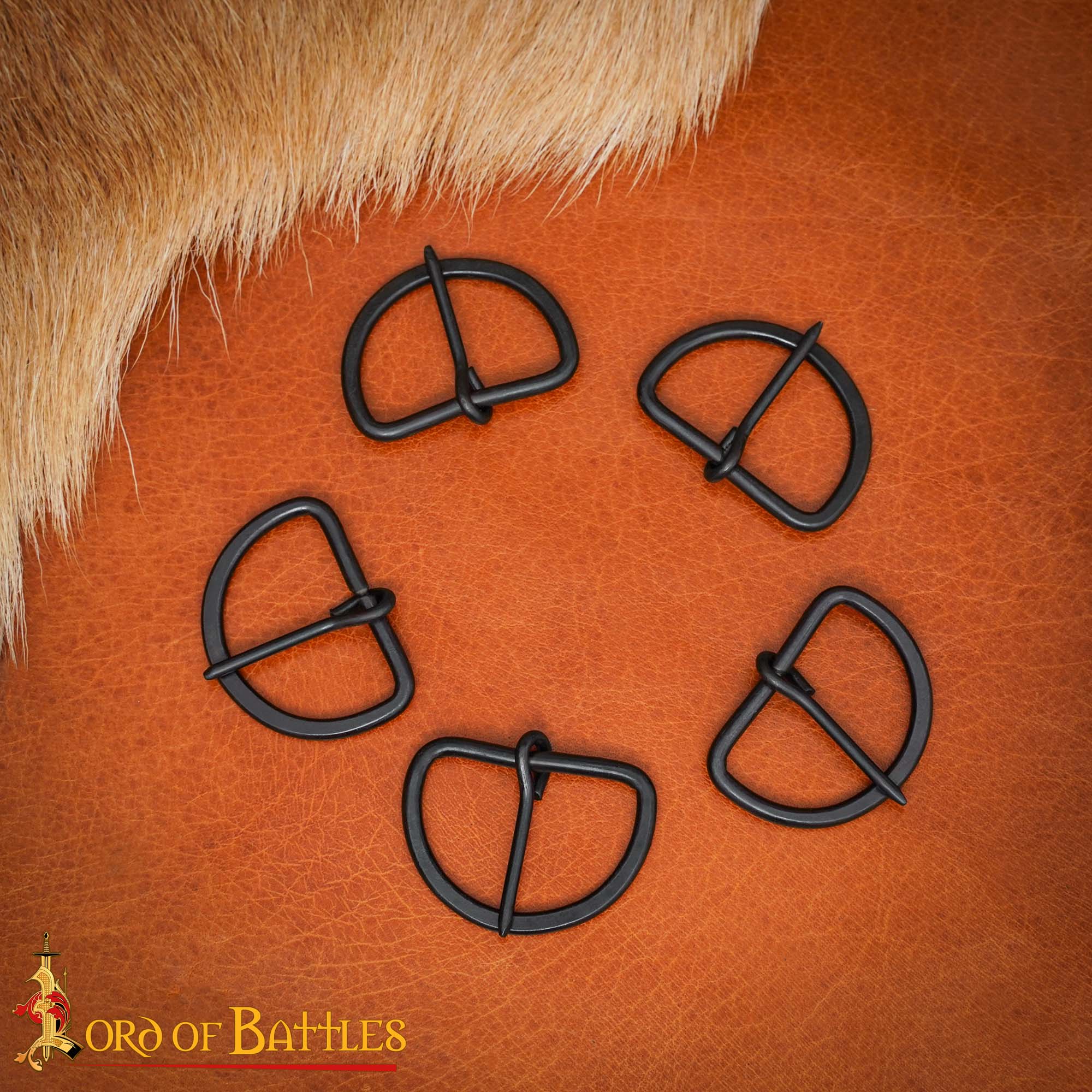
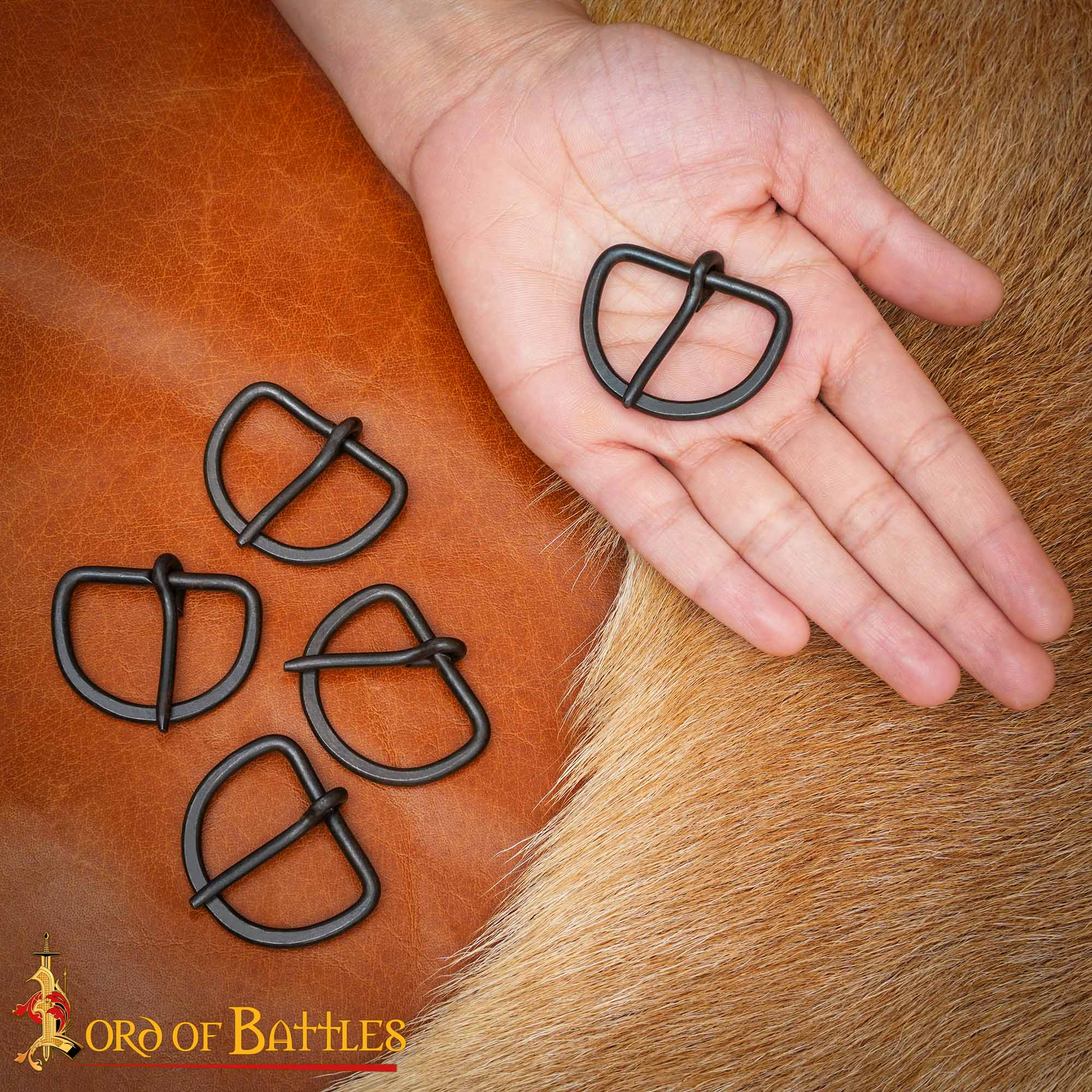
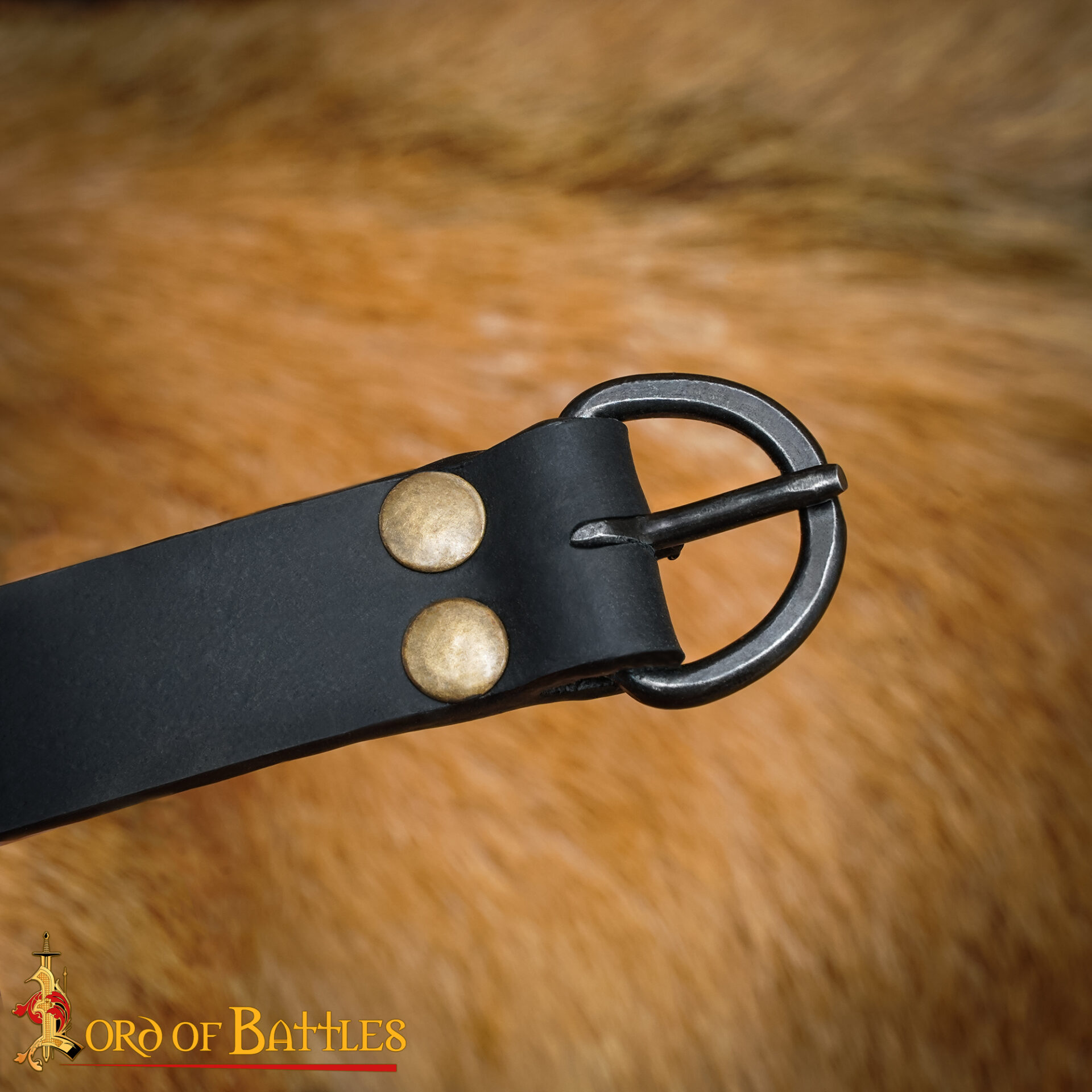
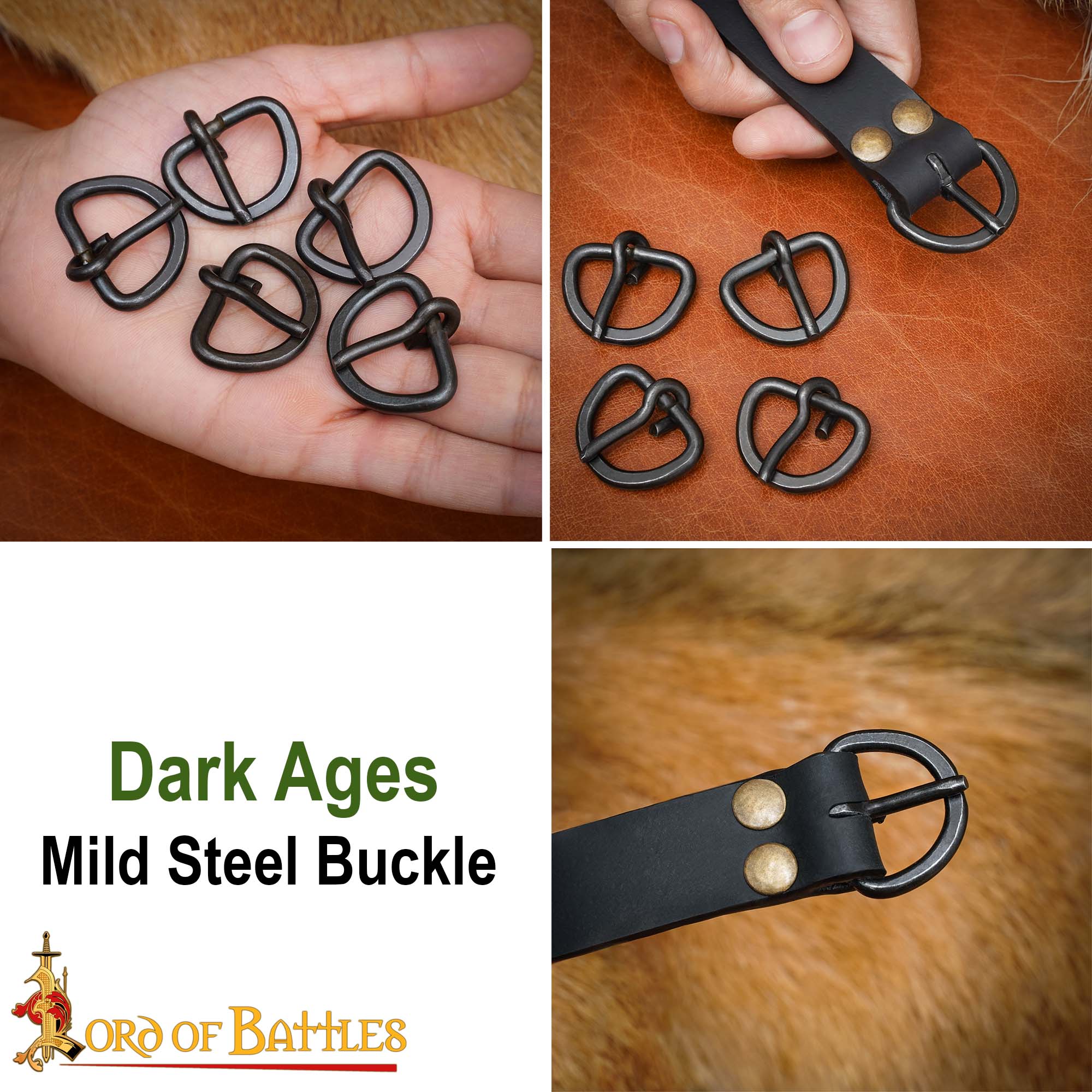



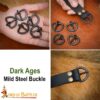
Medieval and Viking Iron Hand-Forged Buckle Set – 5 Pieces
€ 4,99 – € 6,99Price range: € 4,99 through € 6,99
• Material: Solid hand-forged iron
• Finish: Oil black protective coating
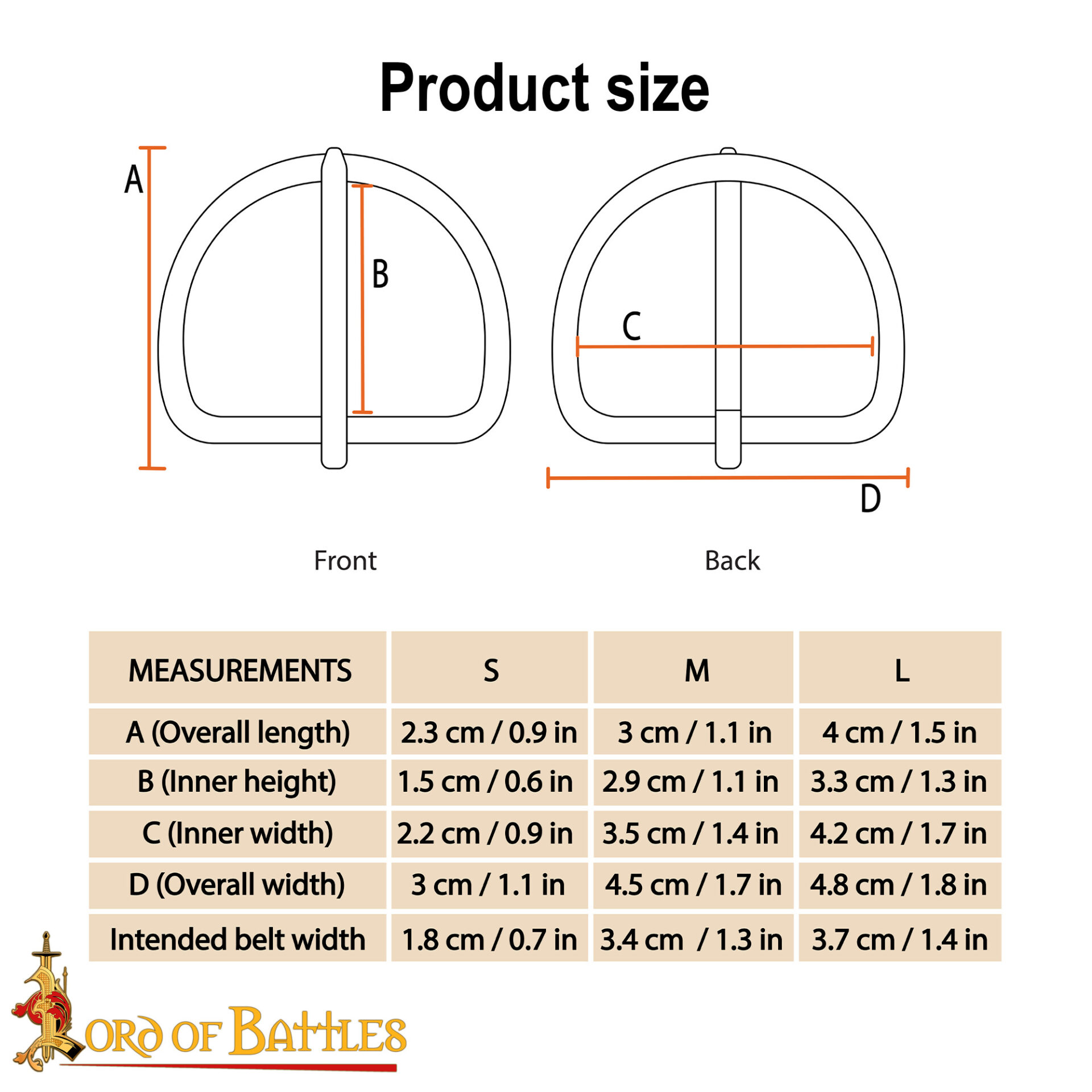
• Size: available in S , M , L
• Weight: Approx. 46 to 80 g per set depending on the size
• Design: Rounded D-shape with integrated prong
• Quantity: Set of 5 pieces
• Use: Styling, LARP and historical crafting
Share this product:
Historically, iron buckles of this shape and size were widely used throughout Europe from the early medieval period into the Renaissance. They were valued for their simplicity and strength when fastening belts and harness straps, as well as their versatility for attaching pouches, securing armor plates, or adjusting garments. Their compact design also helped prevent snagging during movement or combat.
Archaeological finds in Viking burials, Norman sites, and medieval settlements show just how practical and enduring this type of buckle has been over the centuries.
INSTALLATION:
These buckles are designed for simple hand installation on leather projects.
1. Prepare your strap:
Cut a slit for the prong (tongue) and punch holes for stitching or rivets.
2. Attach the buckle:
Slide the strap through the buckle’s loop, fold it over and secure it by stitching or riveting in place.
3. Fit the prong:
The integrated iron prong goes through the adjustment holes you have punched in the strap.
Because the prong is forged as part of the frame, these buckles are stronger and more reliable than modern pressed steel versions.
IDEAL FOR:
• Medieval belts and straps
• Viking and medieval costume accessories
• Historical bags and pouches
• Armor harness construction
• DIY leather craft
CARE INSTRUCTIONS: To maintain finish and prevent rust, occasionally apply a light coat of mineral or vegetable oil, especially after exposure to moisture.⭐
| Weight | N/A |
|---|---|
| Brand | |
| Finish | |
| Size |
Only logged in customers who have purchased this product may leave a review.
Related Products
€ 18,99 – € 19,99Price range: € 18,99 through € 19,99

€ 1,99 – € 12,99Price range: € 1,99 through € 12,99

What Our Customers Say
Hear firsthand from our loyal customers about their experiences with Medieworld’s products and services.
EXCELLENTTrustindex verifies that the original source of the review is Google. Wonderful, great selection. Find new things every time I am there.Posted onTrustindex verifies that the original source of the review is Google. Los productos son fantásticos y de una gran calidad. Es unas tienes genial si buscas vestimenta y accesorios para recreacionismo. Las armaduras y las espadas son impresionantes, así como la variedad de ropa medieval y todos los complementos.Posted onTrustindex verifies that the original source of the review is Google. VERY pleased with my order from MedieWorld!!...I am always skeptical when ordering from somewhere new, but I definitely recommend MedieWorld products. The ordering and navigation of the website was seamless. The pirate belt buckle is a great product..good weight to it and well crafted!...cant wait to use it! The customer support was great too! I contacted them for the tracking number and the young lady that conversed with me, was very professional and addressed my concern immediately...well done and thank you for a great experience. I will DEFINITELY be ordering from them again! PS- AND they sent me a free gift of a Thors hammer!👏👏👏Posted onTrustindex verifies that the original source of the review is Google. Good product, fast delivery and no problems 10/10Posted onTrustindex verifies that the original source of the review is Google. Además de producto de calidad una atención al cliente increíble. Muy contento con la tienda y con la persona que la gestiona.Posted onTrustindex verifies that the original source of the review is Google. Respondieron rápido mi consulta sobre el plazo de entrega, pedí el jueves y hoy lunes por la mañana, ya tengo el pedido entregado mis manos. Y con regalo.Posted onTrustindex verifies that the original source of the review is Google. Sitio increíble, un tesoro en Alicante. Tienen muchísimo material, muy buena calidad, y el trato es inmejorable, literalmente inmejorable, la amabilidad como carta de presentación.Posted onTrustindex verifies that the original source of the review is Google. Serdecznie polecam. Bardzo cenię sobie jakość- ważna też jest obsługa- i to wszystko znajdziesz w Medieworld!👍 świetny towar za przystępną cenę! Wybór ogromny. Jestem bardzo zadowolona z zakupów i z pewnością przy następnej okazji bez namysłu tam wrócę!!! 😀Posted onTrustindex verifies that the original source of the review is Google. Super zatowarowanie w przedmioty średniowieczne. Warto odwiedzić duży wybór, miła obsługa , ceny przystępne i bardzo dobra jakość produktów.Posted onTrustindex verifies that the original source of the review is Google. Es una tienda muy grande, que cuenta con muchas cosas para el larp, y para ambientación medieval. Las dependientas son muy agradables y te ayudan a encontrar todo lo que sea necesario.Verified by TrustindexTrustindex verified badge is the Universal Symbol of Trust. Only the greatest companies can get the verified badge who has a review score above 4.5, based on customer reviews over the past 12 months. Read more

Reviews
There are no reviews yet.