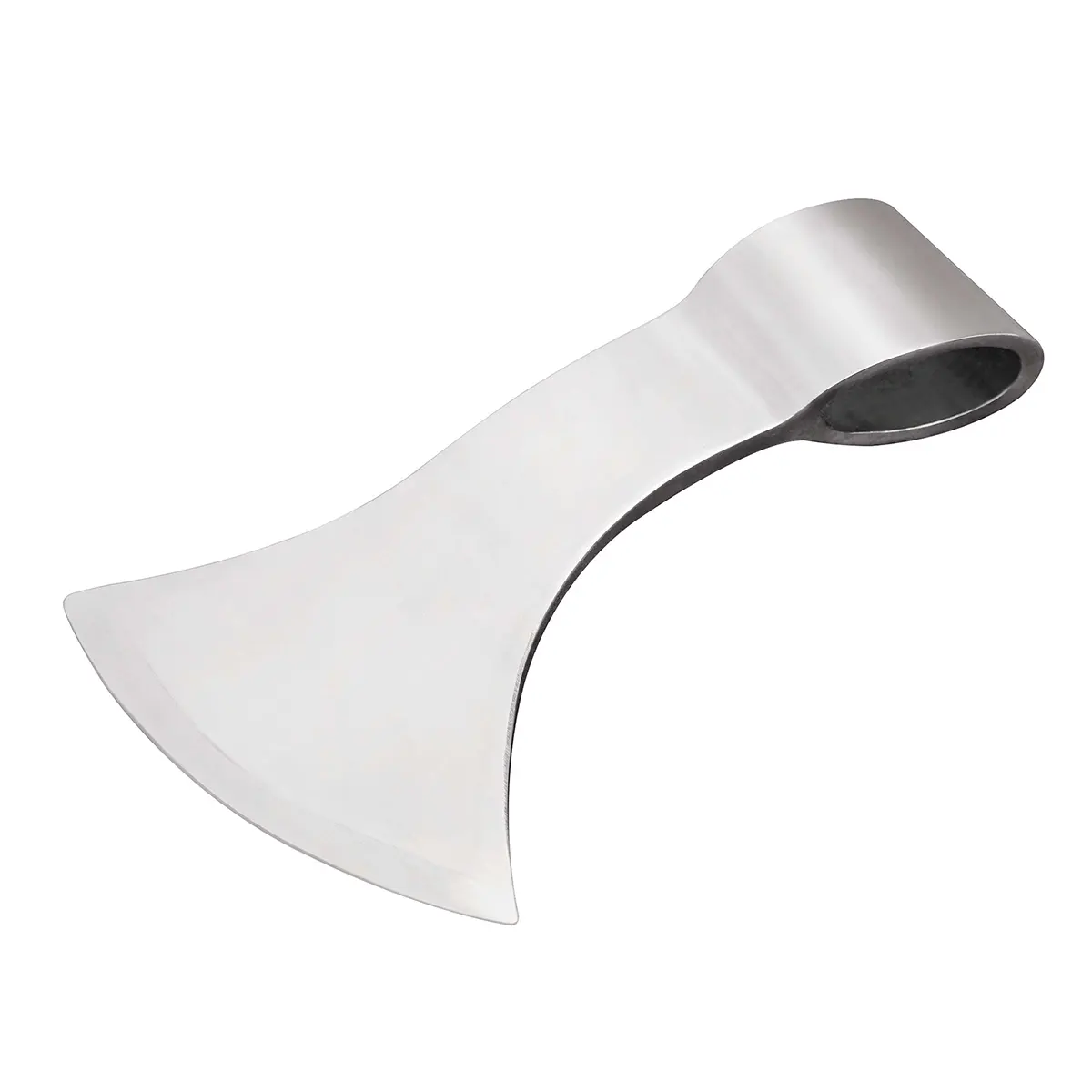
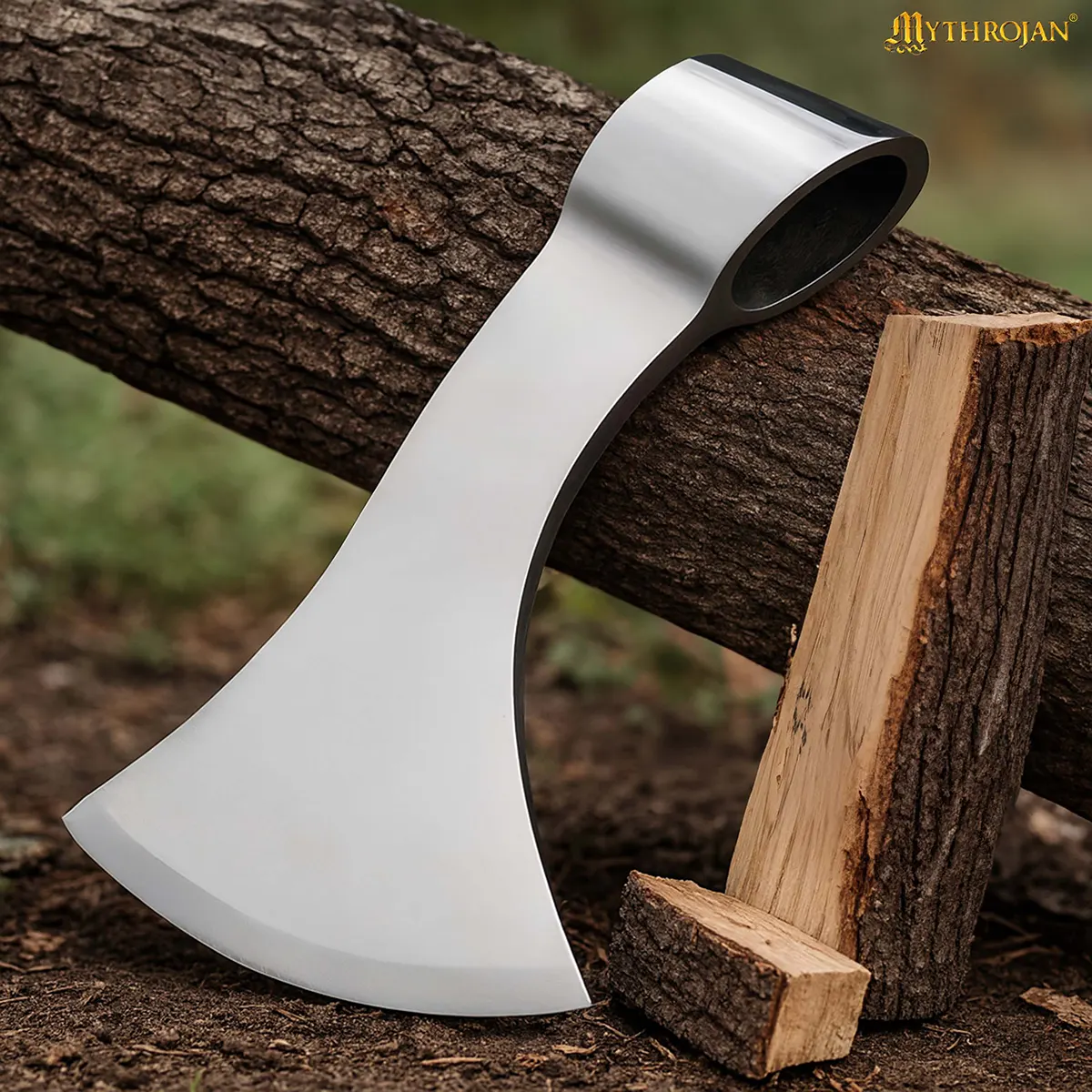
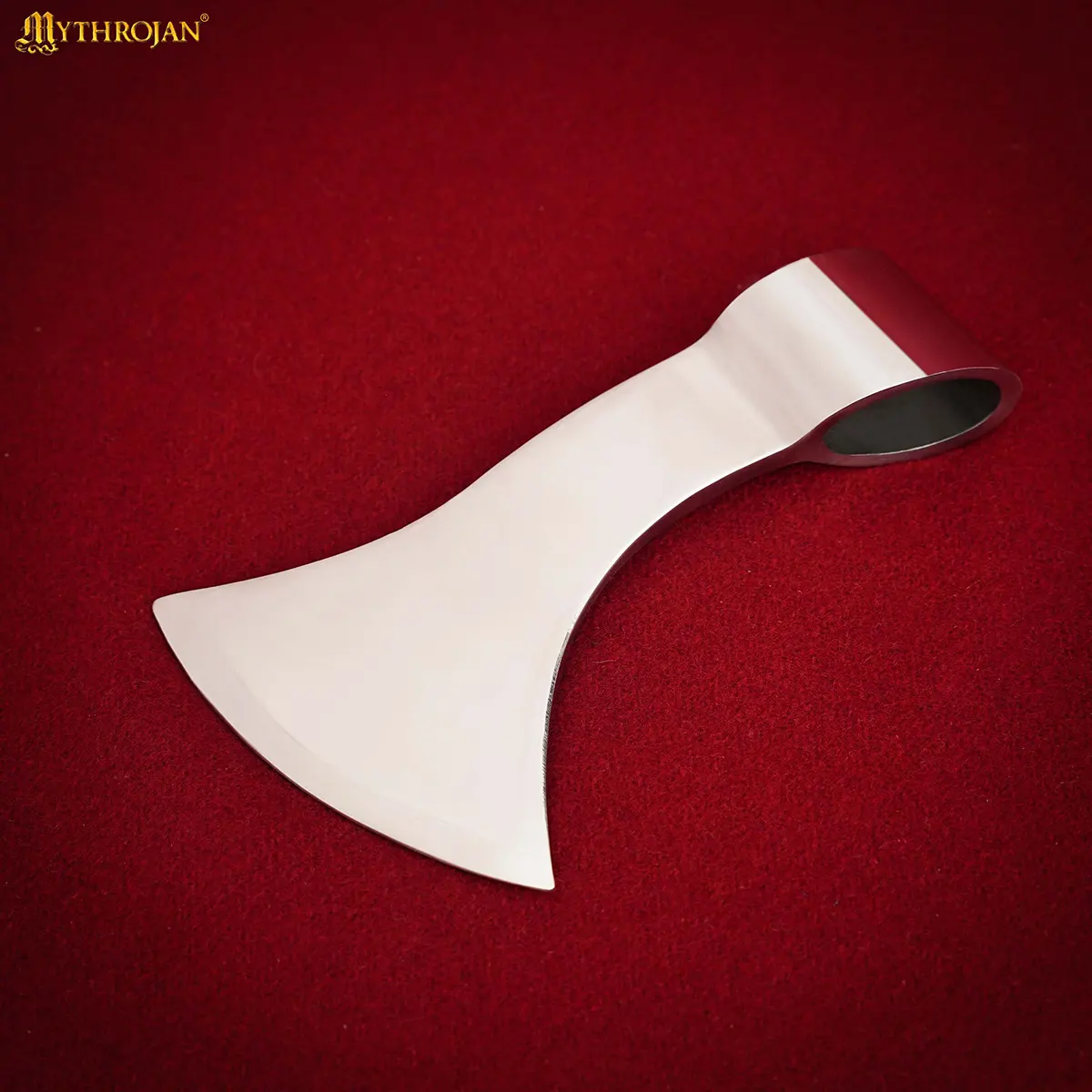
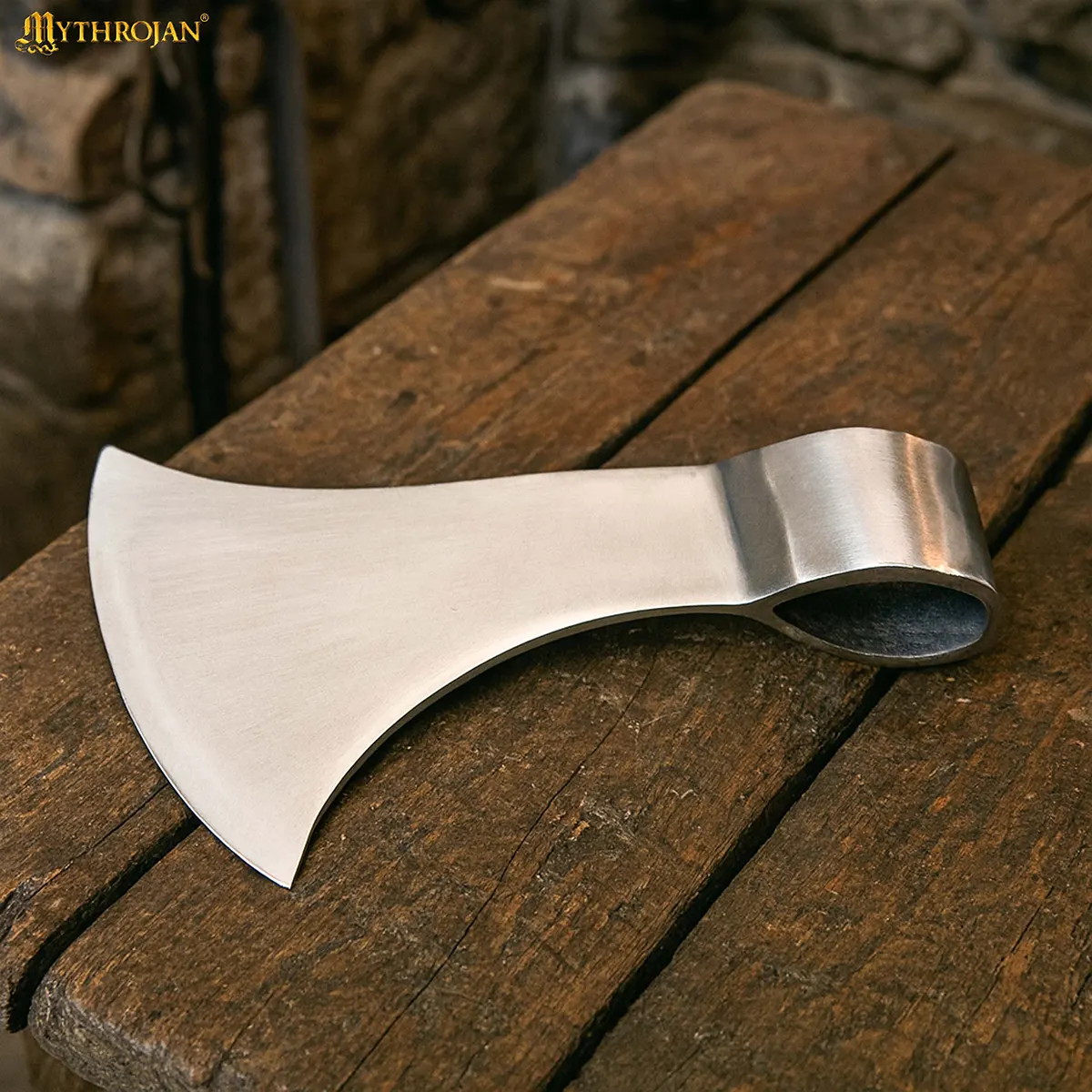
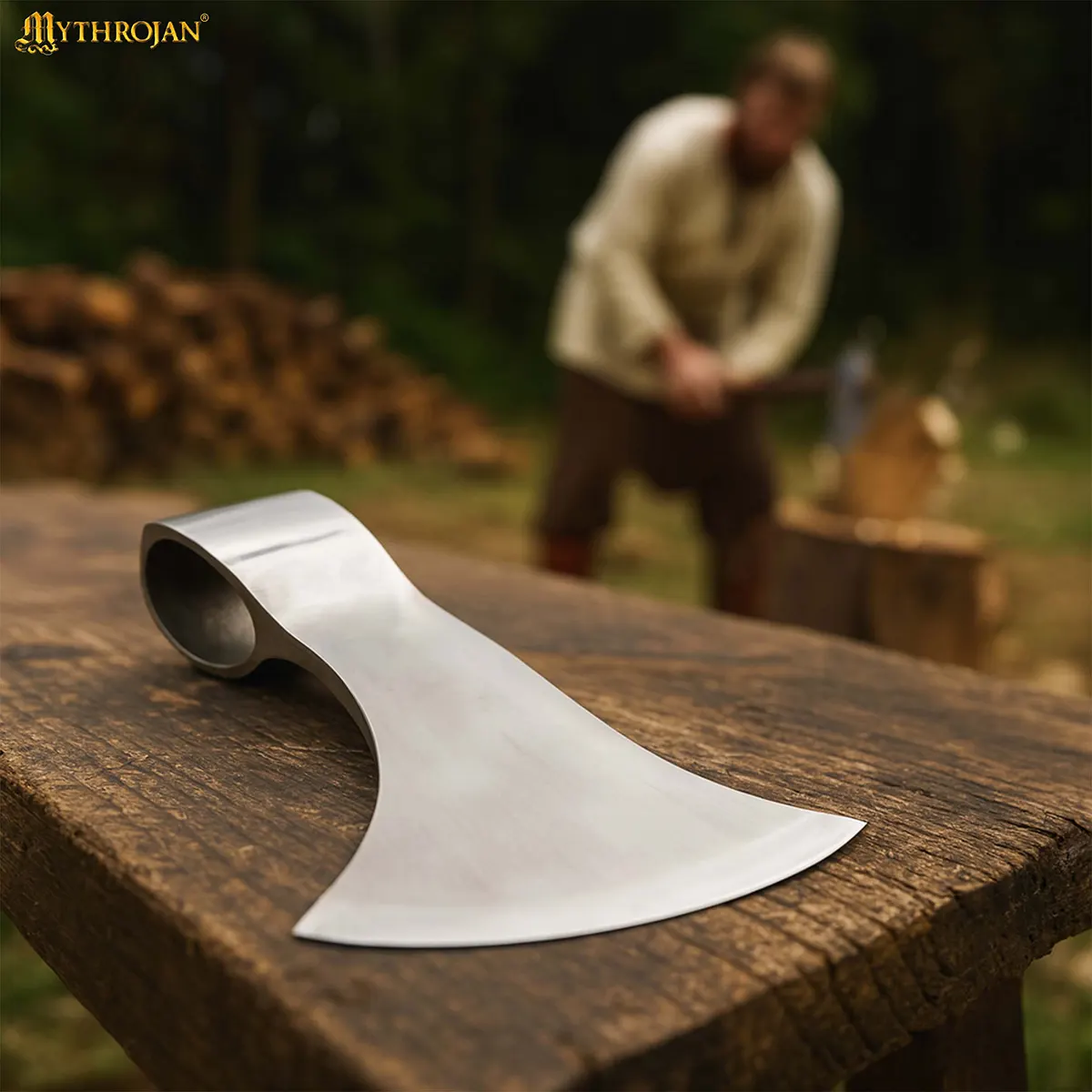
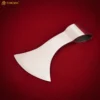
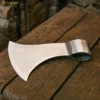
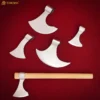
Experience the age of warriors and craftsmen with our hand-forged Viking axe heads, inspired by archaeological finds and centuries of tradition. Forged by skilled hands, each nordic axe head is shaped individually, unlike mass-produced replicas, these axe heads retain the subtle variations.
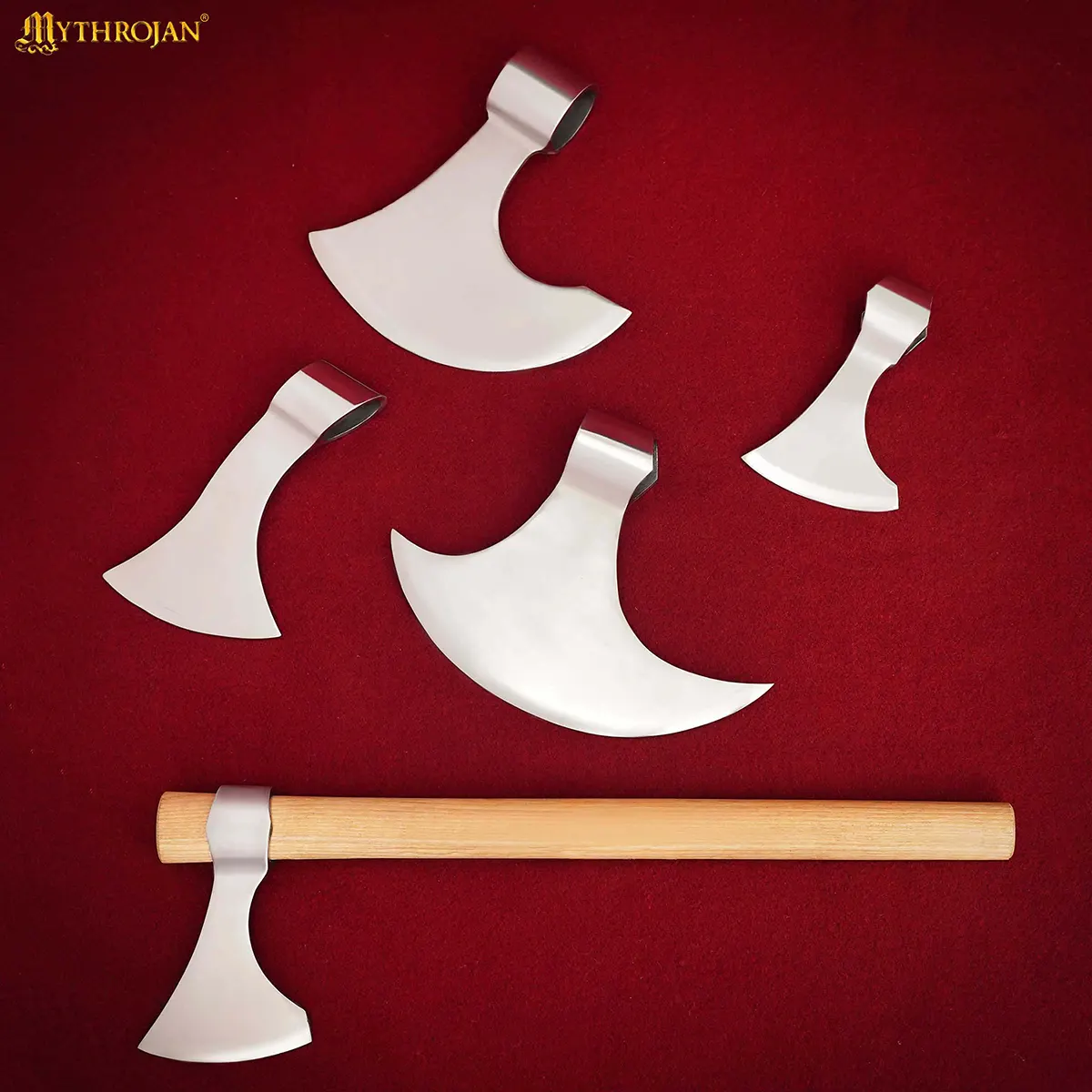
Historical Axe Head Types
1. Bearded Axe (Skeggøx – Viking Age)
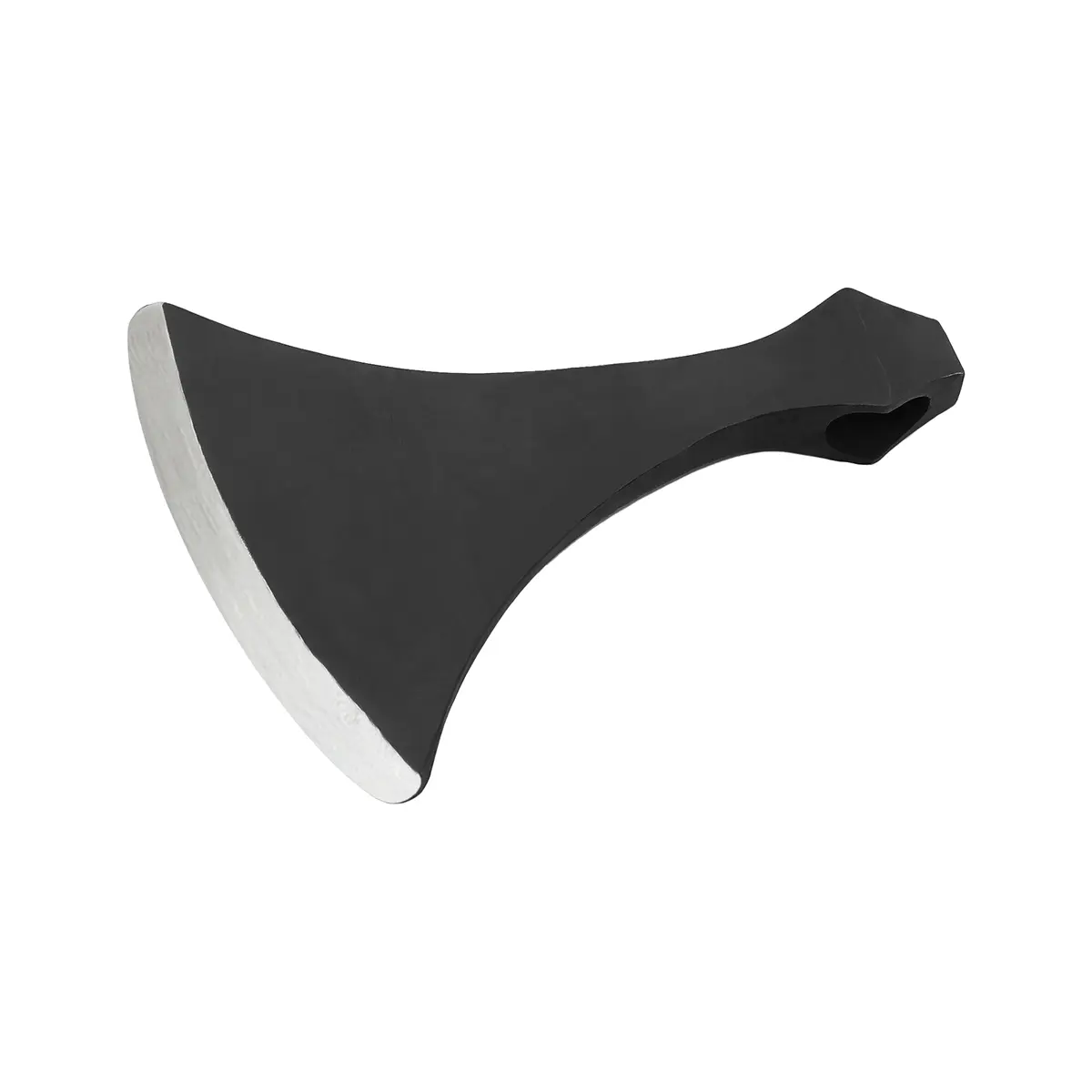
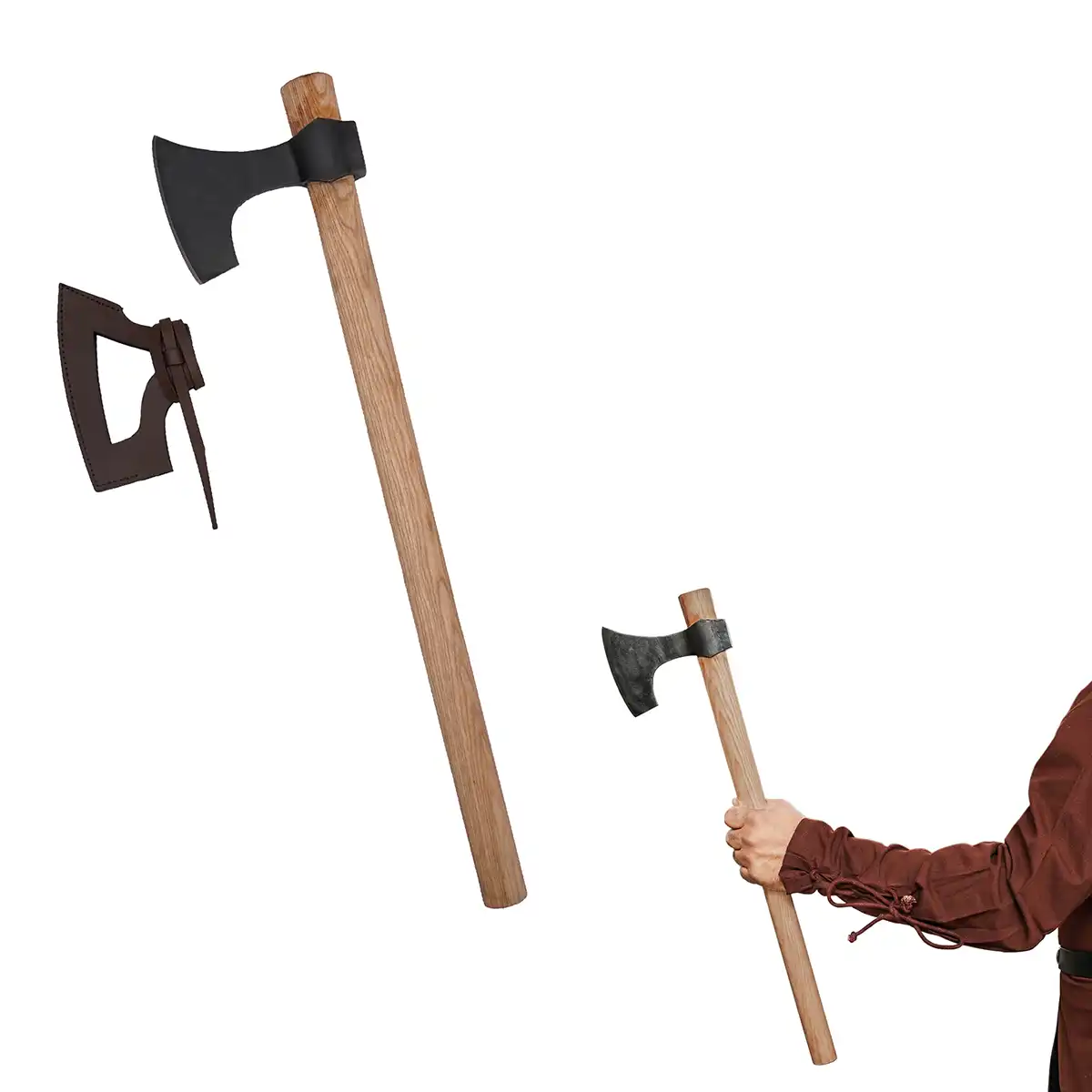
The iconic viking bearded axe, with its elongated lower blade (“beard”), gave both utility as well as lethality. Its design allowed warriors to choke up on the handle for woodworking and precise cuts, while in battle it could hook shields and strike with force.
2. Dane Axe (Broad War Axe)
Massive and intimidating, the dane axe head was wielded by elite Viking huscarls and later medieval warriors. With its wide sweeping blade mounted on a long shaft, it was a weapon of authority and destruction, remembered from the Battle of Hastings (1066) and beyond.
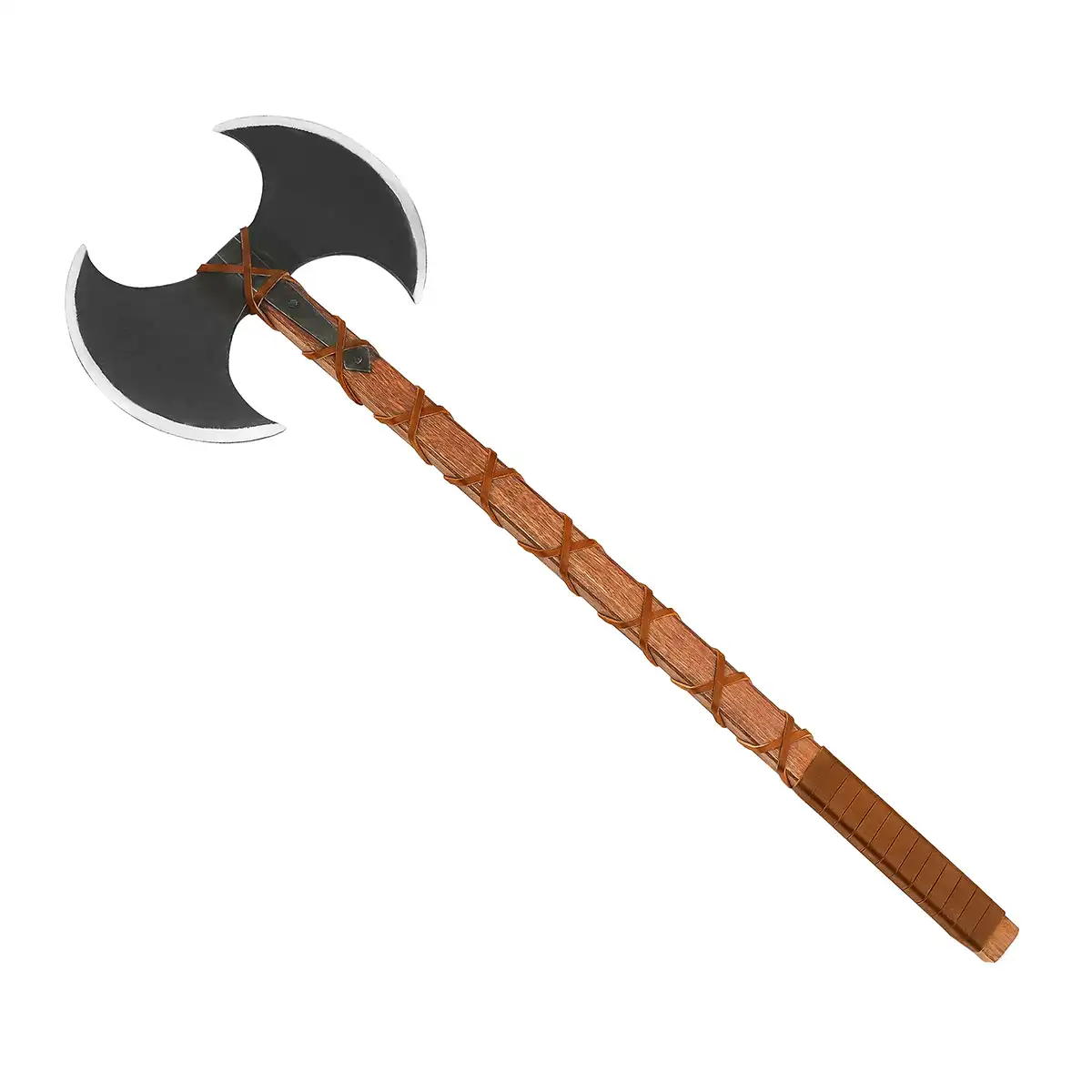
3. Crescent Axe (Moon Axe)
With its striking crescent axe head, the Crescent Axe carried both symbolic and weight. It offered wide slashing capability with acting as a ceremonial object. Its curved edge and pointed tips made it as much a statement of craftsmanship as a weapon of war.
4. Francisca (Frankish Throwing Axe)
The Francisca axe head was the legendary throwing axe of the Franks, so distinctive it gave them their very name. Compact and deadly, its curved blade made it ideal for hurling before a charge, striking terror into opponents. It remains one of the most iconic early medieval weapons.
CARE INSTRUCTIONS:
-
Keep the axe head dry and lightly oiled after use to prevent rust.
-
Avoid exposure to moisture.
-
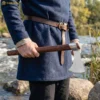
If mounted for use, ensure the haft is properly fitted and checked regularly.
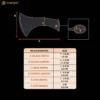
Note : Each axe head is hand-forged, so subtle differences in shape, hammer marks, and finish will occur. The Wooden Shaft is not included.
Q: What material is the Viking axe head made from?
A: It is made from hand-forged carbon steel.
Q: Does this include the wooden handle?
A: No, the wooden shaft is not included.
Q: Can this be used for woodworking?
A: Yes, it is suitable for woodworking and general use when properly mounted.
Q: What types of axe heads are included?
A: It includes bearded axe, dane axe head, crescent axe head, and francisca styles.
Q: Is each piece identical?
A: No, each piece is unique due to the hand-forged process.
Q: Can it be used for reenactment or display?
A: Yes, it is suitable for both display and historical use.
Q: Does it require maintenance?
A: Yes, light oiling is recommended to prevent rust.
Only logged in customers who have purchased this product may leave a review.






Reviews
There are no reviews yet.