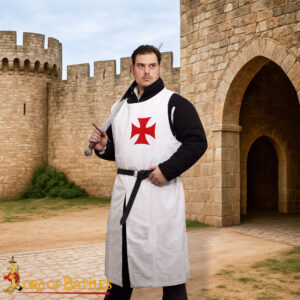
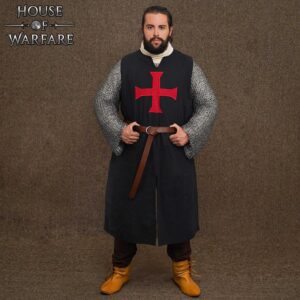
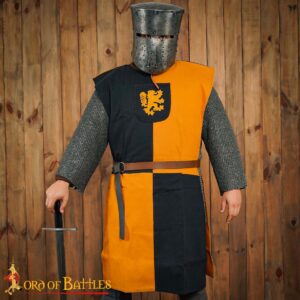
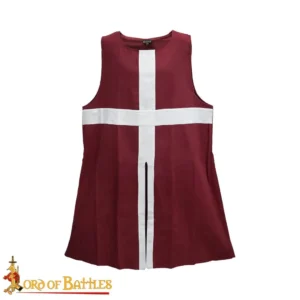
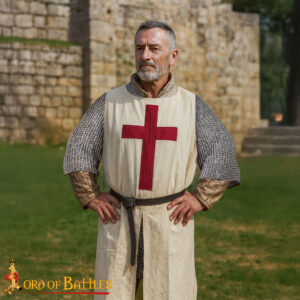
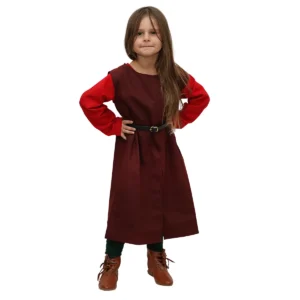
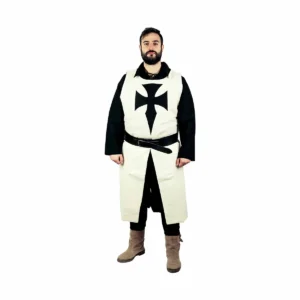
A tabard is one of the most recognizable garments of medieval heraldry, traditionally worn over armour or clothing to display identity, allegiance, and rank. From the Middle Ages onward, the tabard was commonly used by knights, soldiers, and officials to show coats of arms, symbols, or colors on the battlefield and during ceremonies. Today, a tabard remains essential for reenactment, LARP, stage performances, and historical representation.
History, Use & Collection
Historically, the tabard helped differentiate allies from enemies in battle and was also worn during tournaments, marches, and official duties. Our tabard collection includes classic medieval designs suitable for knights, guards, crusaders, and heraldic roles. These tabard styles are ideal for personal customization, faction identification, or authentic costume assembly, making them highly versatile for different historical and fantasy settings.
Materials, Craftsmanship & Wearability
Each tabard is crafted from durable fabrics such as cotton, for comfort, breathability, and long-term use. Careful stitching and balanced cuts allow the tabard to drape naturally over armour or garments without restricting movement. Designed for extended wear, a tabard from Medieworld offers historical accuracy, clean structure, and reliable quality, making it a practical and authentic addition to any medieval outfit or armour setup.
Frequently Asked Questions
Q: What is a medieval tabard used for?
A medieval tabard was traditionally worn over armour or clothing to display a knight’s coat of arms, colors, or allegiance. It helped identify allies during battles and tournaments. Today, tabards are commonly used in reenactments, LARP events, stage performances, and historical costumes to represent factions, characters, or heraldic symbols.
Q: Can a tabard be worn over armour?
Yes. A tabard is specifically designed to be worn over armour, gambesons, or tunics. Its open-sided structure allows it to drape comfortably over armour without restricting movement, making it ideal for knights, soldiers, and reenactors wearing full medieval gear.
Q: What materials are used in your tabards?
Our tabards are crafted from durable cotton fabrics, chosen for breathability, comfort, and long-lasting wear. The fabric allows the garment to drape naturally while being lightweight enough for extended use during events, performances, or reenactments.
Q: Can tabards be customized or decorated?
Yes. Tabards are often used for heraldic customization, meaning they can display symbols, coats of arms, faction emblems, or colors. Many reenactors, LARP participants, and performers personalize their tabards to represent specific characters, orders, or historical groups.