Blog

15th Century Male Clothing: A Fashion Journey Through Medieval Times

15th Century Male Clothing: A Fashion Journey Through Medieval Times

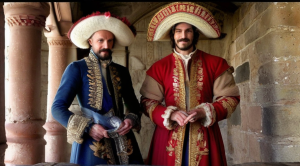
Step into the fascinating world of the 15th century and explore the timeless fashion of male clothing during this period. From noble knights to humble peasants, the clothing of the medieval era reflects the social hierarchy and cultural influences of the time. In this article, we will delve into the various styles and garments that defined the 15th century male fashion. The Influence of the Medieval Society The 15th century was a time of significant changes in European society. The rise of cities, trade, and the development of a middle class had a profound impact on fashion. The clothing choices of individuals reflected their social status, occupation, and personal tastes. Among the nobility, lavish and opulent attire was a symbol

Read More...

Exploring the Beauty of Medieval Music

Medieval music is a fascinating and enchanting art form that flourished during the Middle Ages. It offers us a glimpse into the rich cultural heritage of that time, when music played an integral role in daily life. In this article, we will delve into the wonders of medieval music, its instruments, and its importance in society. The Origins of Medieval Music Medieval music has its roots in the Gregorian chant, a form of vocal music that was predominantly performed in Christian liturgical settings. This monophonic chant developed in Western Europe during the 9th and 10th centuries and became the foundation of medieval musical traditions. Over time, new musical styles and forms emerged, including organum, which introduced polyphony and harmonic complexity,

Read More...
Greek Tunics & Cloaks: A Fashion Statement from Medieval Times

Greek Tunics & Cloaks: A Fashion Statement from Medieval Times

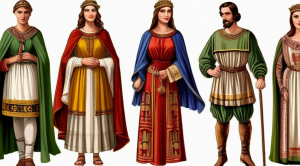
Introduction Greek tunics and cloaks have been an integral part of fashion during medieval times. These clothing pieces not only served as a functional garment but also made a bold fashion statement. In this article, we will explore the history, design, and significance of Greek tunics and cloaks in the medieval era. History of Greek Tunics & Cloaks Greek tunics and cloaks have their roots in ancient Greece, where they were commonly worn by both men and women. The tunic, known as chiton in Greek, was a simple garment made of rectangular-shaped fabric draped over the body. It was typically made of wool or linen, and the length varied depending on the individual’s social status. Cloaks, on the other hand,

Read More...

The Architecture of Medieval Castles: A Journey Through Time

Medieval castles are not only magnificent structures that showcase the architectural prowess of ancient civilizations, but they also hold a rich history of power, defense, and social structure. These castles were built during the Middle Ages, between the 5th and 15th centuries, and are a testament to the ingenuity and craftsmanship of the people of that era. Join us on a journey through time as we explore the fascinating architecture of these medieval castles. Evolution of Castle Architecture The Early Years: Motte and Bailey Castles During the early medieval period, castles were primarily built as defensive structures. The most common type was the Motte and Bailey castle. These castles consisted of a raised earth mound, called a motte, with a

Read More...

The Development of Medieval Weaponry Over Time

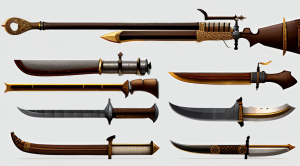
The medieval period was a time of constant evolution and innovation in weaponry. From the early Middle Ages to the late Middle Ages, there were significant changes in the design, materials, and usage of weapons. This article will explore the development of medieval weaponry over time, highlighting the key advancements and their impact on warfare. Early Middle Ages: The Age of Axes and Spears In the early Middle Ages, axes and spears were the primary weapons of choice for medieval warriors. These weapons were relatively simple in design, consisting of a wooden handle with a metal head. Axes were used for both chopping and hacking, while spears were ideal for thrusting and throwing. As medieval warfare evolved, so did the

Read More...

Medieval Marketplaces: A Glimpse into the Past

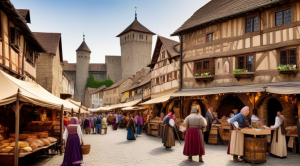
Imagine stepping into a bustling medieval marketplace, filled with the sights, sounds, and smells of a bygone era. Merchants calling out their wares, the clinking of coins, and the aroma of freshly baked bread wafting through the air. Medieval marketplaces were vibrant hubs of commerce and social gathering, playing a crucial role in the economic and cultural development of towns and cities. In this article, we will delve into the fascinating world of medieval marketplaces, exploring their history, significance, and the variety of goods and services they offered. The Origins of Medieval Marketplaces Medieval marketplaces, also known as fairs or markets, have roots that can be traced back to ancient times. However, it was during the Middle Ages that they

Read More...

Medieval Monastic Life: A Path of Devotion and Learning

In the medieval period, monastic life played a significant role in society. Monasteries were not only places of religious devotion but also centers of learning and culture. The monks who dedicated themselves to this way of life led a disciplined existence that focused on spirituality, education, and service to others. The Role of Monasteries Monasteries were established as communities of monks who followed a set of rules and regulations. The most famous of these rules was the Rule of Saint Benedict, which emphasized obedience, poverty, and chastity. Monks lived in isolation from the secular world, dedicating their lives to prayer, reflection, and manual labor. One of the primary functions of monastic life was to provide a place of worship and

Read More...

The History and Significance of Medieval Swords

Medieval swords hold a special place in history as powerful weapons that were symbolic of strength, authority, and honor. These finely crafted weapons were used by knights and warriors during the Middle Ages. In this article, we will explore the history and significance of medieval swords, their different types, and their lasting impact on medieval society. The Evolution of Medieval Swords The origin of medieval swords can be traced back to ancient times, with the early swords being simple and functional. However, with the rise of armored warriors in the Middle Ages, the design and craftsmanship of swords evolved to meet the demands of battle. During the early medieval period, single-edged swords like the Norman sword and the Viking sword

Read More...

Exploring the Medieval Apothecary: Ancient Remedies and Potions

The medieval period was a fascinating time in history, filled with stories of knights, castles, and epic battles. But beyond the realm of knights and warriors, there existed a mystical world of medicine, potions, and remedies. In this article, we will take a journey back in time to explore the medieval apothecary and discover the ancient remedies and potions that were used to treat ailments and promote health. The Role of the Apothecary in Medieval Society In medieval times, the apothecary played a crucial role in society. They were the herbalists, healers, and pharmacists of their time. Their knowledge of plants, herbs, and natural remedies made them highly sought after individuals. Apothecaries were responsible for preparing and dispensing medicines, creating

Read More...

Chainmail in Battle: Its Effectiveness and Limitations

Introduction Chainmail has been used as a form of armor in battle for centuries. Its interlinked metal rings provide protection to the wearer, while allowing for flexibility and movement. In this article, we will explore the effectiveness of chainmail in battle, as well as its limitations. The Effectiveness of Chainmail Chainmail is known for its ability to protect the wearer from slashing and cutting attacks. The interlocking rings distribute the force of the blow, preventing it from penetrating through the armor. This makes chainmail particularly effective against swords, knives, and other sharp weapons. Another advantage of chainmail is its ability to absorb the impact of blunt force. While the rings may not completely stop the force, they spread it out

Read More...

The Process of Making Chainmail: A Deep Dive

Chainmail is an ancient form of armor that has been used for centuries to protect warriors in battle. It consists of small interlocking rings that create a flexible and sturdy mesh. In this article, we will take a closer look at the process of making chainmail, from the selection of materials to the final assembly. Materials Needed Before diving into the process, it is important to gather all the necessary materials. Here are the key items you will need: 1. Wire The first step in making chainmail is to select the right type of wire. Traditionally, steel wire was used, but nowadays, aluminum and other metals are also common choices. The wire should be strong enough to withstand the rigors

Read More...
A Beginner's Guide To Live Action Role Playing

A Beginner's Guide To Live Action Role Playing

Live Action Role Playing, also known as LARP, is a popular activity that allows participants to immerse themselves in a fantasy world. Whether you are a fan of medieval knights, magical creatures, or epic battles, LARPing offers a unique and interactive experience that combines elements of theater, improvisation, and physical activity. What is LARP? LARP is a form of role-playing game where participants create and portray characters in a fictional setting. Unlike traditional tabletop RPGs, LARPing requires physical interaction and real-time action. Players dress up in costumes, use props and weapons, and engage in simulated combat to bring their character to life. LARP events can range from small gatherings in local parks to large-scale festivals that span multiple days. The

Read More...

Leave Your Message

Need help creating your perfect outfit? Message our team for tailored advice!

Scroll to Top