Historical Inspiration
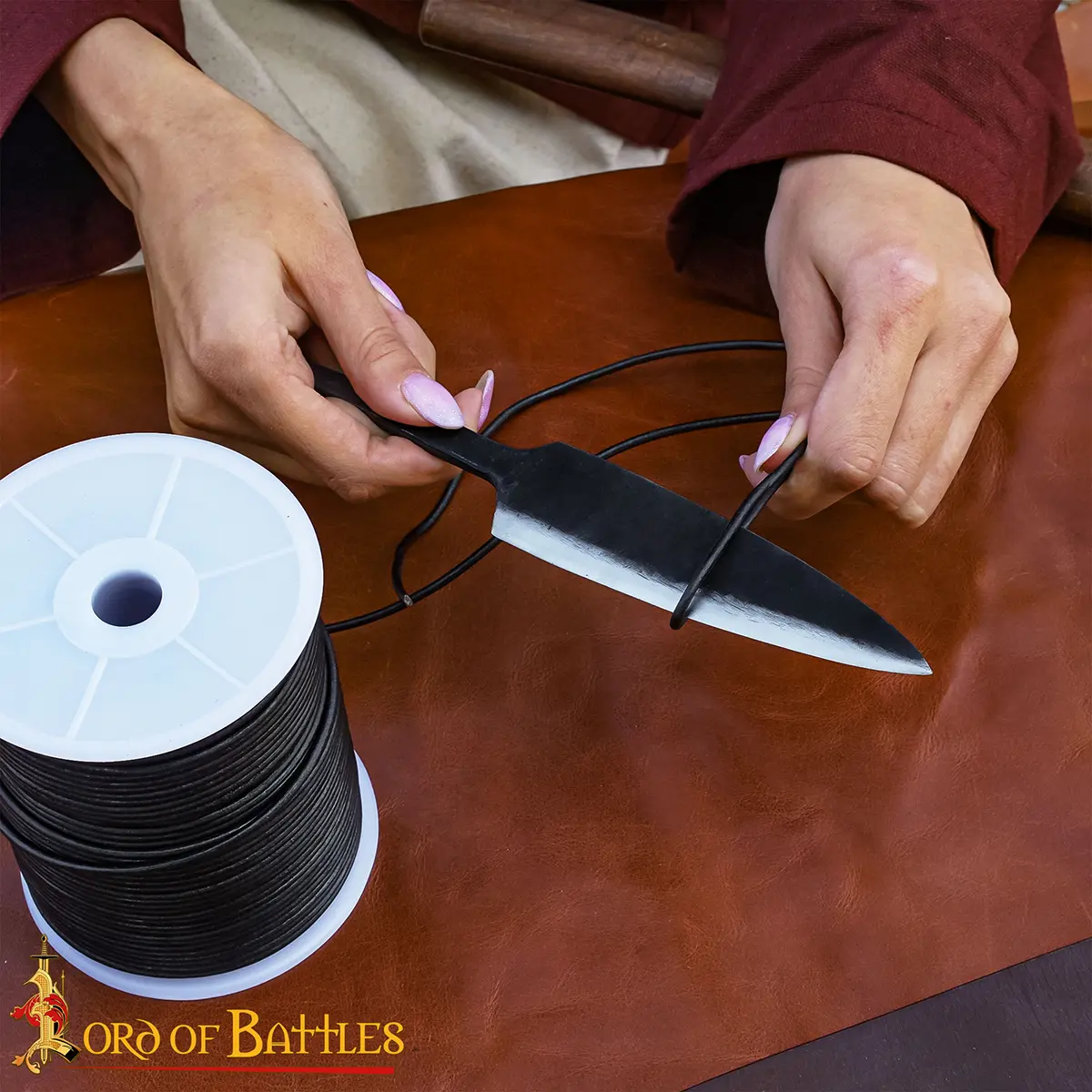
This medieval knife follows the plain, hard-working blades that cooks, craftsmen, and travelers once carried at their belts. In a medieval camp, one good knife did most of the work. It cut bread, trimmed cord, prepared food, and went back to work the next day.
The Medieval Knife: Material and Features
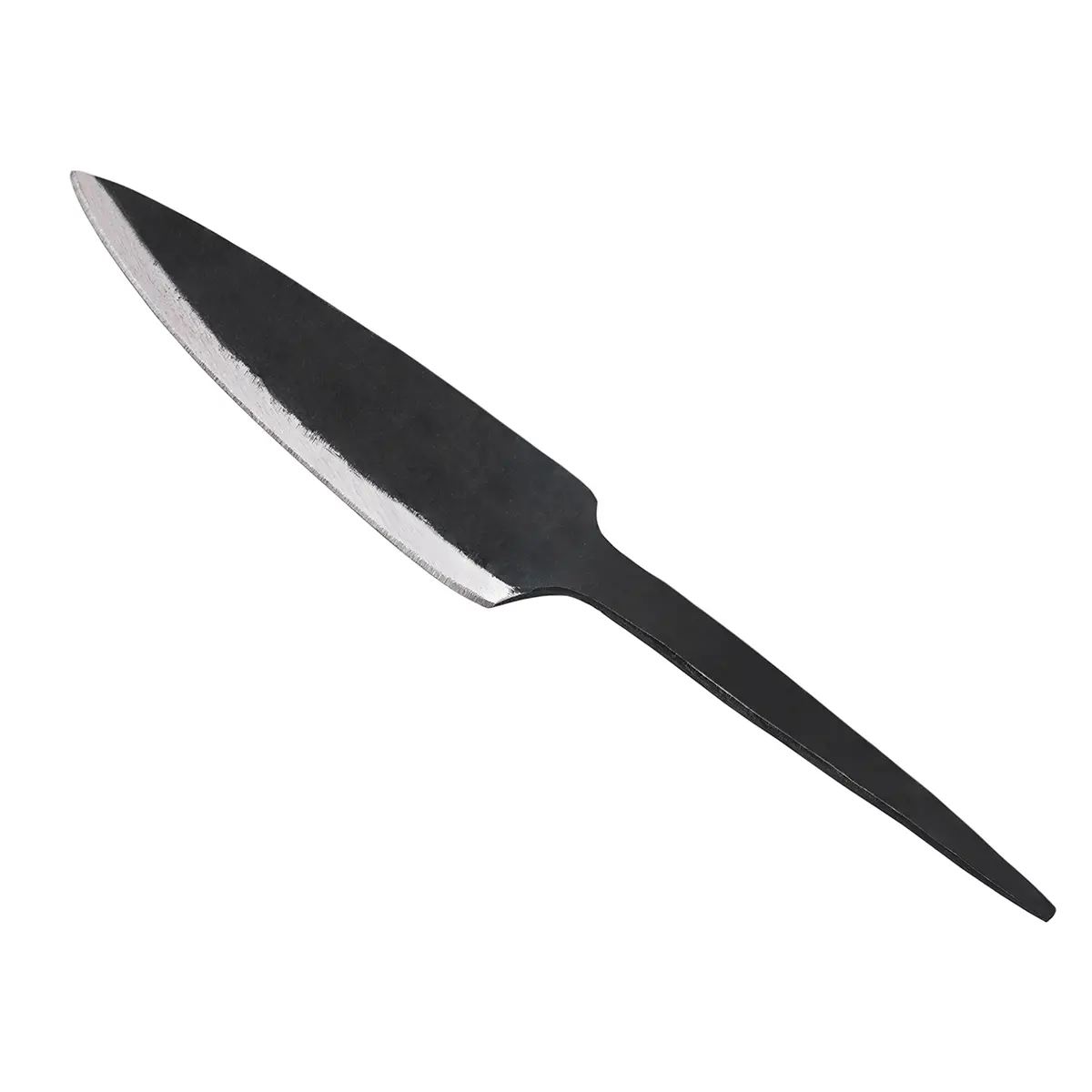
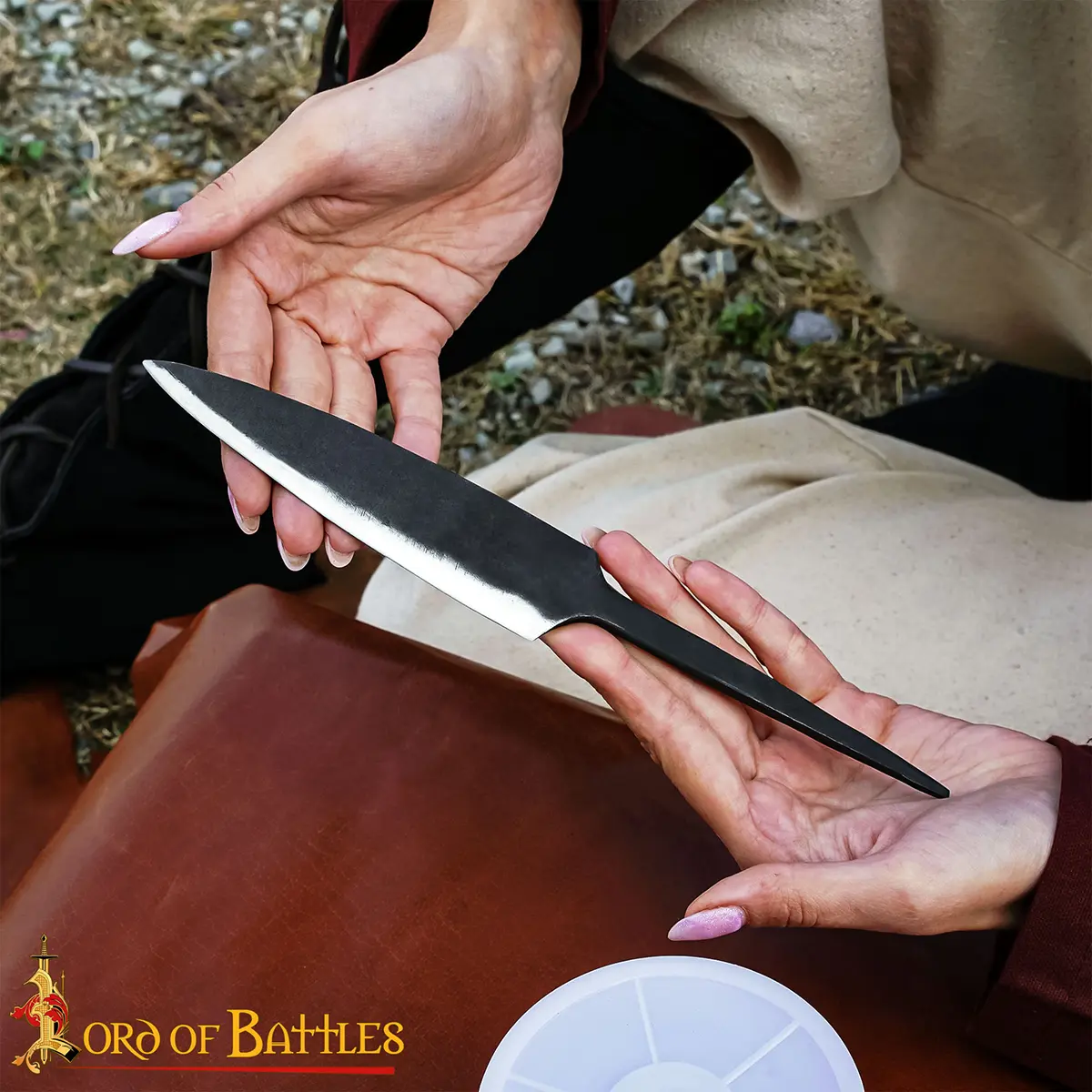
Each medieval knife is hand-forged from iron and left with a natural finish, so the marks of the forge stay visible. It is durable and long lasting, a rustic knife that only gets better with use and care. The bare tang is the best part for makers. Wrap it, bind it, or fit a handle, and turn a working blade into a personal piece.
- Material: Hand-forged iron.
- Finish: Natural forged finish.
- Construction: Forged by hand, so each piece is slightly different.
- Durability: Durable and long lasting with regular care.
- DIY Handle: The bare tang takes a tang cover or handle of your choice, such as leather, cord, wood, or bone.
- Rust Note: Prone to rust, so regular oiling is needed.
Versatile Uses
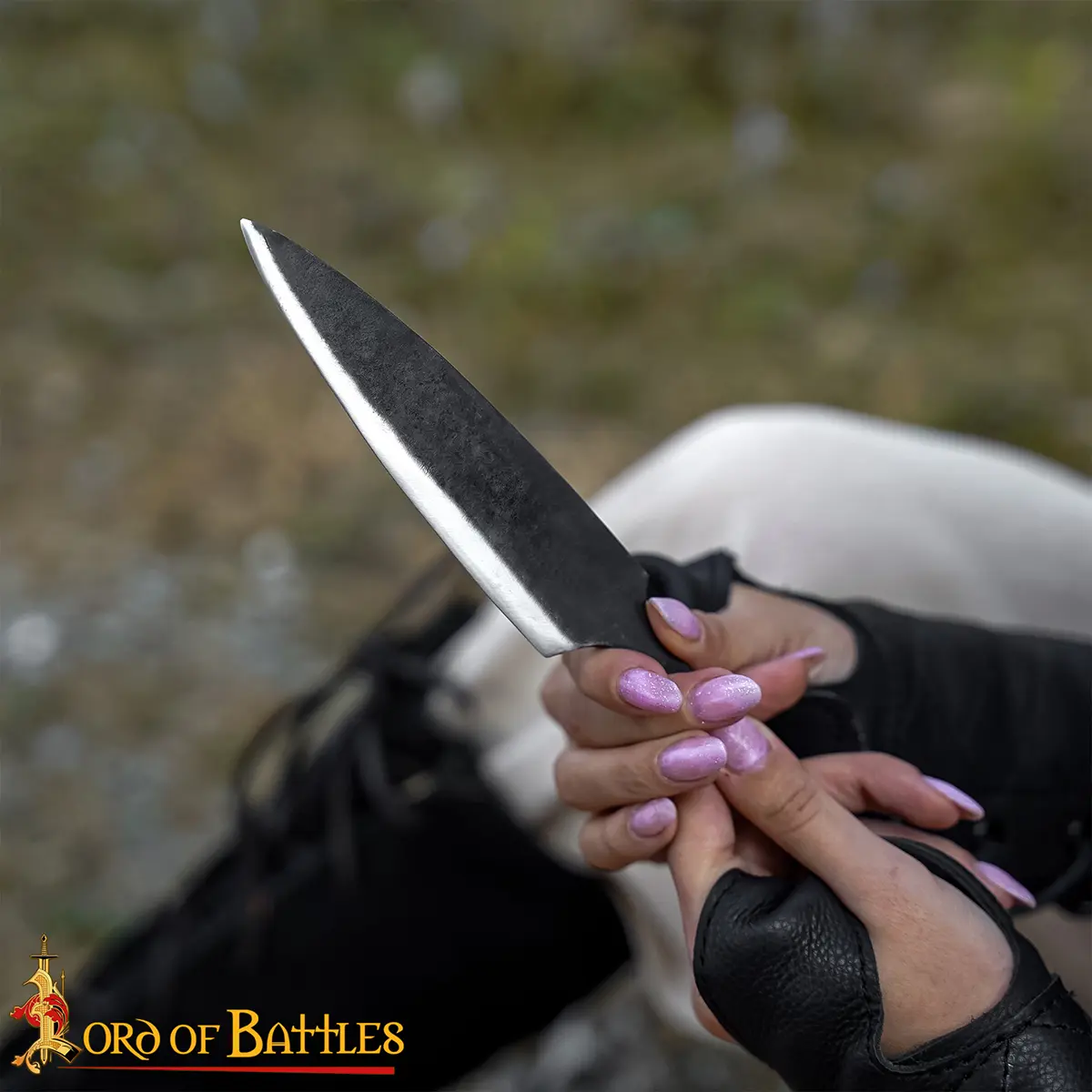
As a medieval utility knife, it moves easily from the reenactment field to the campfire.
Suitable for:
- Reenactments and medieval events
- Events, fairs, and festivals
- Camping and outdoor work, as a reliable camping knife
- Everyday cutting tasks
- Display in a historical or rustic collection
Care Instructions
- Wipe the knife clean after each use.
- Dry it fully, do not leave it wet.
- Apply a thin coat of oil regularly to prevent rust.
- Store in a dry place, away from damp air.
- Remove light surface rust with fine steel wool, then oil again.
Note: This medieval knife is forged by hand. Small differences in shape, tone, and hammer marks are natural signs of real craft, so no two pieces are exactly the same. This is a real blade, handle it with care and keep it away from children.
Only logged in customers who have purchased this product may leave a review.



Reviews
There are no reviews yet.